Problems Our Client Faced
- Manual inspections too slow to keep pace with production line speed
- Inconsistent quality checks allowing faulty units to reach customers
- No scalable process for quality assurance as production volumes grew
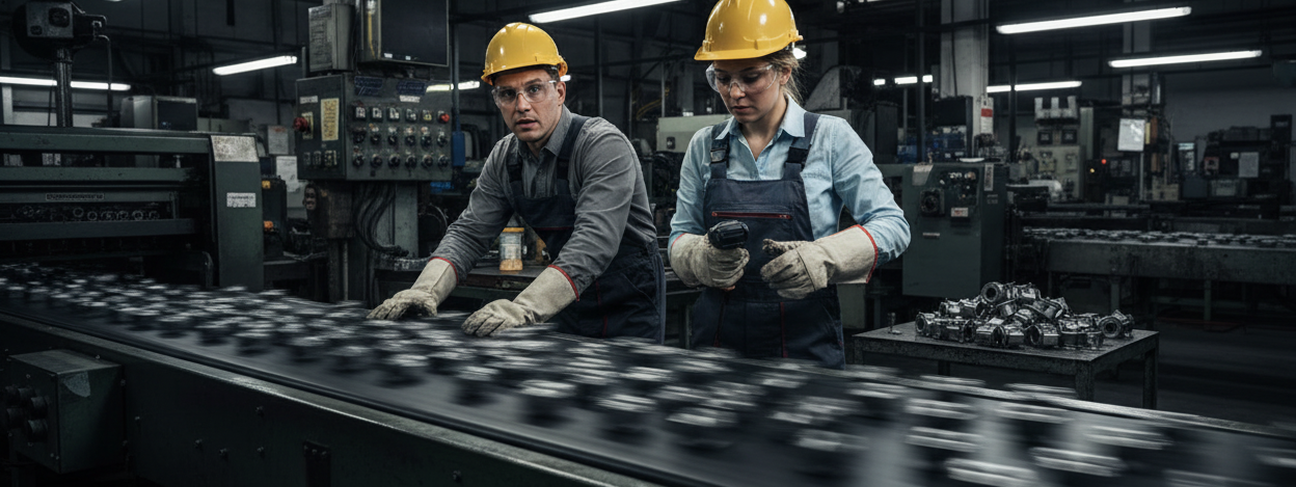
A manufacturer approached Digital is Simple when manual visual inspections were slowing down their production line and allowing faulty units to slip through to customers. The existing process was too dependent on human consistency, and at line speed, that inconsistency was costly. Our AI development consultancy team analysed the operation, identified computer vision as the right solution, and guided the client through everything they needed to develop and deploy a system that could keep up with production without compromising quality.
Manufacturing
AI Consulting Services
We reviewed the existing inspection process, documenting line speeds, lighting conditions, and the range of defect types the team was manually screening for.
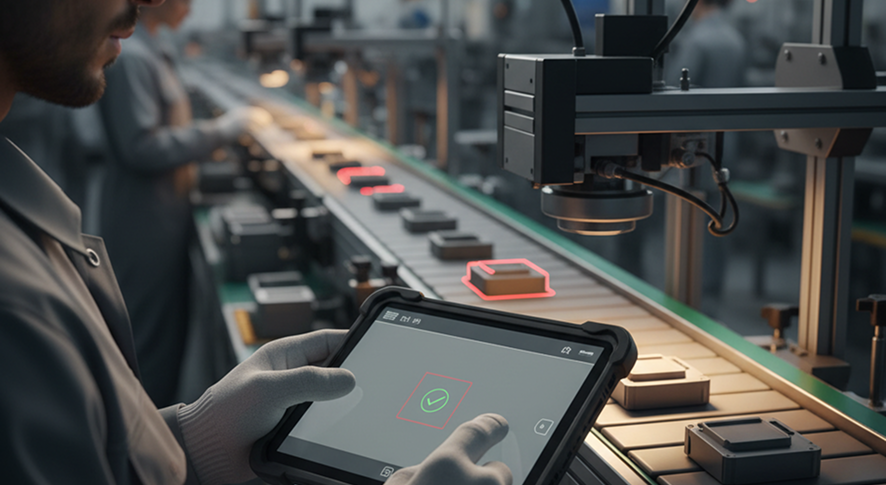
Based on our analysis, we recommended a custom-trained computer vision model development built around the client’s specific products and defect profiles, rather than an off-the-shelf tool that would require the operation to adapt around it.
We outlined exactly what data would need to be collected, what the model would need to learn, and what hardware, cameras, lighting, mounting, would be required to make the system viable at line speed.
We delivered a structured plan covering model training, hardware installation, on-site calibration, and go-live, giving the client a clear path from problem to working solution.
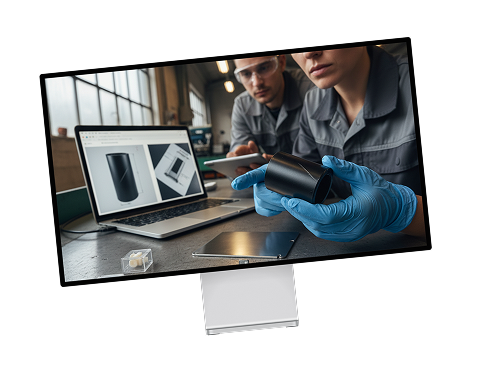
Defects varied significantly in appearance. A key part of our consultancy was helping the client understand the breadth of data they would need to collect to train a model that could handle real-world variability.
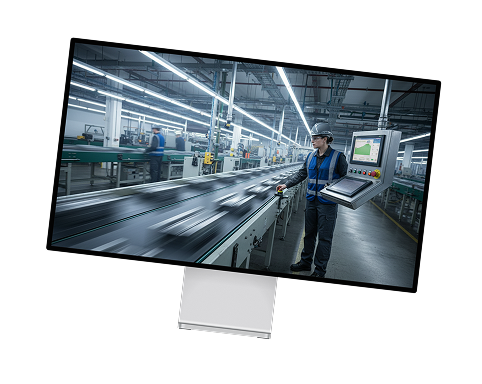
The client needed reassurance that an AI system could inspect at line speed without becoming a bottleneck. We advised on the right model architecture and hardware specifications to meet both requirements.
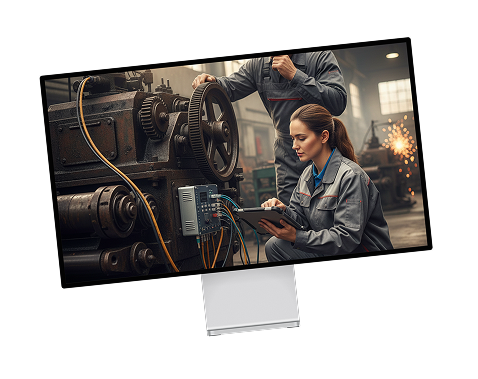
The factory ran on older machinery with no native compatibility for new systems. We factored this into our recommendations, advising on integration approaches that would minimise disruption to live production